
Acknowledgements: We very much appreciated the input from the JRHT Landscape Manager, Project Manager of the Parks and Landscapes Service, and the Derwenthorpe Gardening Team and from the Chair, Secretary and members of the Derwenthorpe Residents’ Association.
“It Creates a Real Sense of Place”: Policy Implementation Lessons for Managing Green Spaces for the Community
Uncategorized Wednesday 13 August 2025
Written by Steve Cinderby and Jean McKendree, Stockholm Environment Institute, University of York
How long-term collaboration and community-led planning can support Biodiversity Net Gain
The Future Land Use project, part of the ‘climate-ready places’ work package of the Yorkshire Policy Innovating Partnership (YPIP) project, is looking at innovative ways to create biodiverse green spaces that benefit both nature and communities. The team interviewed the key stakeholders at Derwenthorpe in York, a mix of social rent/shared ownership homes owned by the Joseph Rowntree Housing Trust and privately owned homes.
The Derwenthorpe Housing Model
Derwenthorpe is a development in York owned by the Joseph Rowntree Housing Trust (JHRT) with high-quality environmentally friendly, energy efficient homes, and a large communal green space with smaller gardens and spaces around the area. JHRT was established over 110 years ago to provide decent affordable homes in well managed communities and prioritising those in greatest need. Derwenthorpe is a mix of social rent/shared ownership homes owned by JRHT and privately owned homes.
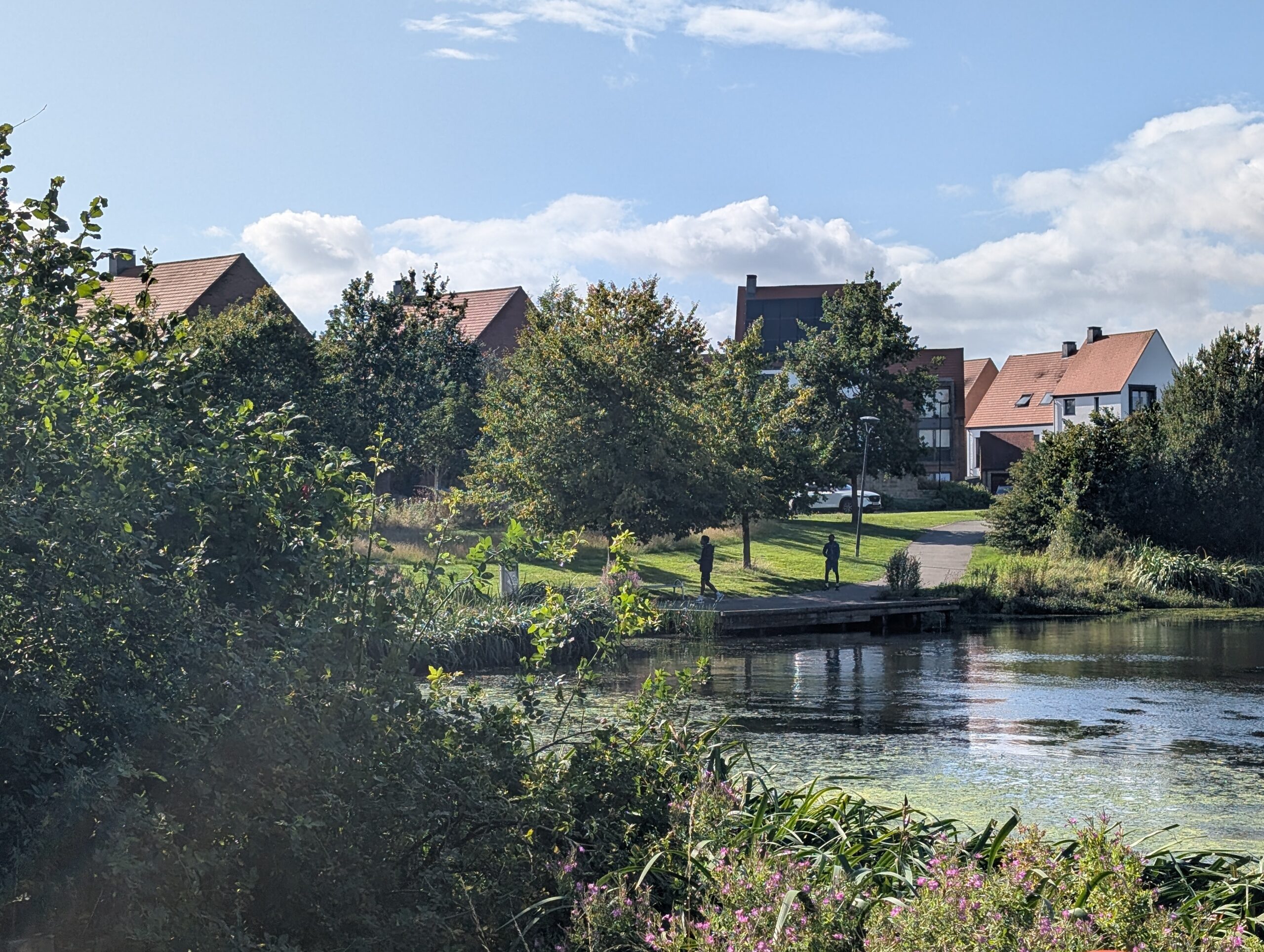
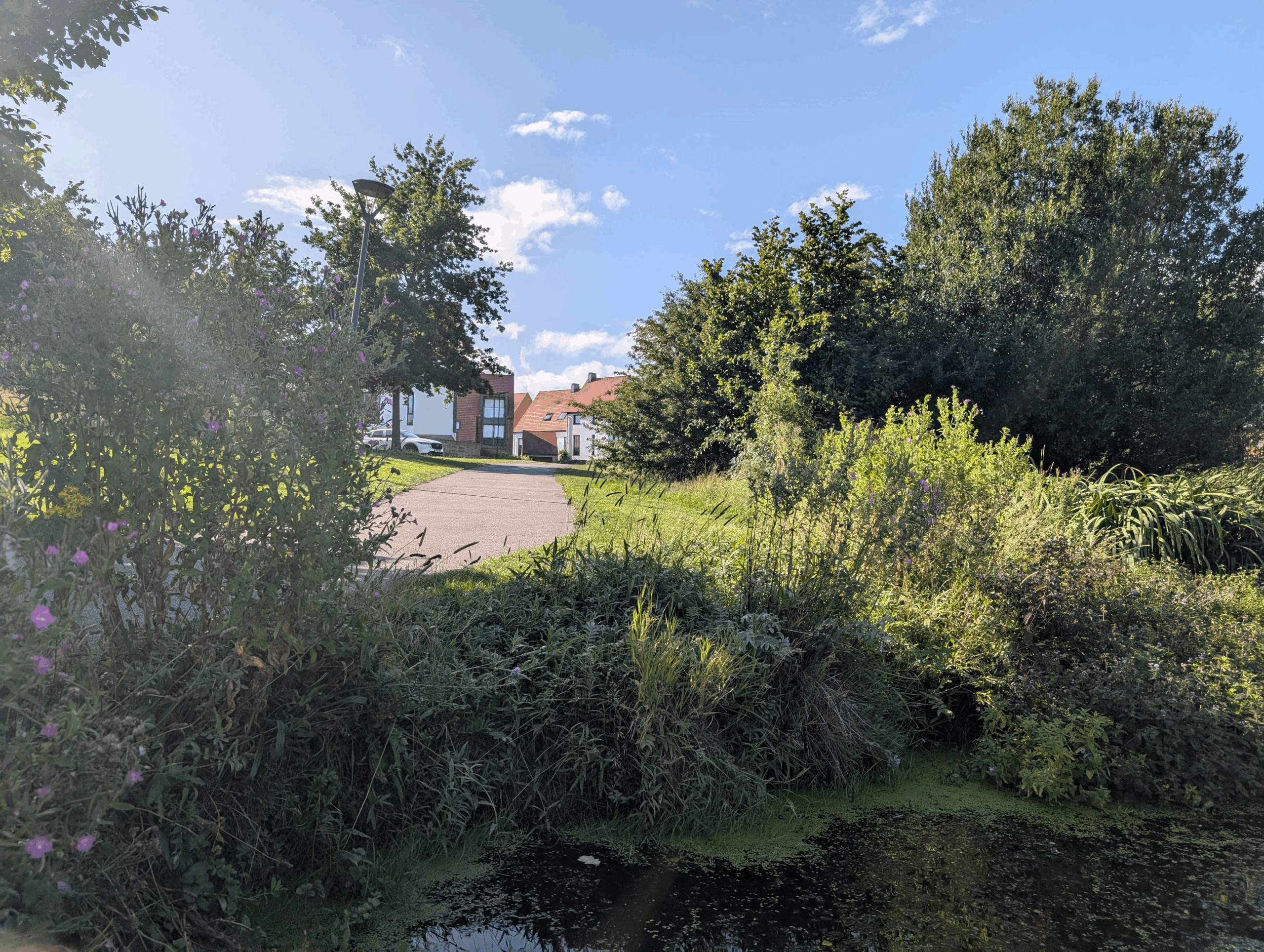
Each resident pays an annual charge for estate management, which covers maintenance of communal spaces in the Super Sustainability Centre, a central green space, recreational areas, paths, landscaping, hedgerows, shrubs, wildflower meadows, trees, ponds and swales which are also part of the sustainable urban drainage system.
The residents are very active collaborators in the governance of the site through a Governance Group and a Residents’ Association that meet regularly with the JRHT management and the gardening team.
Development of green spaces (or lack of it) in new housing
Before the Derwenthorpe site was developed, the area was a scrubby field that flooded easily. After the development of the first phase of the site, the maintenance of the existing green space for many years was very traditional and was a very “manicured”, low biodiversity area. JRHT wanted to make a more versatile space in collaboration with the residents and ran 12 workshops with local residents to create plans for a more diverse, useable greenspace with a different style of management.
Many housing developers aim to build quickly and get out and many buy offsets for biodiversity loss elsewhere rather than developing proper green spaces on-site. Many of these offsets are on country estates where the actions would have been done anyway. Developers often plant trees but then there is no obligation to monitor or replace them in the long term. Also, with many developers, there is a wide gap between their planning application greenspace proposal and the actual development delivered on the ground. JRHT representatives noted that the covenants by developers often don’t happen and there is no money to fix the lost covenants or even to find out what was promised in the first place.
Derwenthorpe was completed before the implementation of the Biodiversity Net Gain (BNG) policy that requires developers to enhance biodiversity on sites by 10% (in terms of size, quality or type) after building completion for the next 30 years. They can deliver this either by on-site improvements (the preferred approach), off-site improvements (undertaken elsewhere) or by buying biodiversity credits (from the market or government) that link to biodiversity improvement schemes undertaken in other locations.
At Derwenthorpe, while JRHT did implement some off-site mitigation at a neighbouring York community, the on-site biodiversity gains at Derwenthorpe would have been enough not to require offsite mitigation; with easily more than a 10% gain.


Collaboration with residents
During the later stages of the site, in collaboration with residents, the JRHT Development Project Manager developed a 20-year Landscape Strategy for green spaces which was adopted by the residents’ group in October 2023 and covers aspects of soft landscaping, tree planting, grounds maintenance, ponds, etc. This plan has proven vital in informing new residents of agreed plans and actions, holding responsible parties to account, and resolving issues if there are complaints about actions or if activities are proposed which are not agreed in the plan. The residents said it had a huge positive effect; being used day-to-day, but more importantly as a strategic function for planning.
Finding the right people and approach to collaboration is important. Residents felt that the first JRHT representative was somewhat obstructive and some of the literature produced was “patronising” and it felt as if JHRT wanted to be “in control” rather than working together. The residents, who pay fees for upkeep, wanted to be more involved in decisions so the Derwenthorpe Governance Group (DGG) was formed and commissioned the 20 year green space plan. The new JRHT manager was felt to be “great” and worked closely with residents on green space planning including commissioning ecological surveys paid by JRHT.
Continuing the relationship and connecting communities
There was some opposition to Derwenthorpe from surrounding communities before the development was built. However, the green spaces have provided a connection to the wider area in a number of ways, seen and unseen. For instance, there were initial concerns raised regarding the possibility that the drainage system at Derwenthorpe would increase flood risk downstream. However, because the site was designed with a sustainable urban drainage system to manage surface water runoff, including restoration of Osbaldwick Beck and connected waterways, during the Boxing Day floods in York in 2015, these areas did not have any problems even though there had been repeated flooding in the past. The large green spaces were purposely designed to connect with the surrounding communities and are now very popular with dog walkers, runners, cyclists and children.
Volunteers from the community work with the gardening team, who they noted are “very open and collaborative”, on activities such as hedge-laying and wildflower meadow creation. Some activities are outsourced to St. Nicks, a local nature reserve and charity that is working to create connected, biodiverse green spaces across York, helping further connect the Derwenthorpe development to wider York.
Creating a community
Derwenthorpe has developed into a thriving community through the collaborative relationship between the residents and JRHT. Residents pay fees, but also feel this gives them the right and responsibility to be involved in decisions and the partnership has developed into a productive one. Of course, it was noted that there are many residents who are not actively involved for a variety of reasons, but they know that they have committed community champions and the residents’ group to turn to. They have found that the large, communal spaces and a small activities fund provided by JRHT have encouraged groups that can be harder to engage to get involved, such as the younger people organising a well-attended festival for residents and others in the local area.
As one resident said, the relationship may have some issues, but overall it is about helping people appreciate what they have and, by being involved in decisions and activities, in the end “there is a strong sense of place and we owe a big debt to the ‘first footers’ for setting up the collaboration.”
Policy lessons for Biodiversity Net Gain Implementation
The experience of Derwenthorpe indicate that to maximise the benefits of biodiversity uplift for residents and deliver co-benefits for health and wellbeing, developers must invest time in engaging new residents of developments in co-designing long-term management plans. The management fees paid by Derwenthorpe residents mean that the JRHT is able to remain involved in the site post construction.
For many sites this is not the case, implying that Biodiversity Net Gain policy needs to include a requirement for community engagement in the development of 30-year land use plans. Such engagement would help guarantee relevance for the residents, ensuring land use meets their preferences alongside biodiversity improvement objectives. Such co-design could also encourage greater community hands-on involvement in the management of new greenspaces reducing maintenance costs and increasing resident’s interaction with nature.


Partners










Related post
14 Aug 2026
“Gerrin’ on wi’ it” podcast series – episode 9
In this episode of Gerrin' on wi' it, guests Rich Crisp from Sheffield Hallam University and TJ Clark from the...

26 Jun 2026
Chain Lane – Evidencing Strength-Based Community Led Social Action
This report presents an analysis of Chain Lane Community Hubʼs ways of working, examining whether and how they support and...
23 Jun 2026
“Gerrin’ on wi’ it” podcast series – episode 8
In this episode of Gerrin’ On Wi’ It on the Research and Innovation Podcast, host Lauren Cox is joined by...
19 Jun 2026
Knowledge, Collaboration and Time: Reflections on Working with Peer Researchers
In this blog, academic researchers Matthew Reason and Clare Danek consider the role of peer researchers within their Communities Innovating...
19 Jun 2026
“Gerrin’ on wi’ it” podcast series – episode 7
In this episode of Gerrin’ On Wit’ It, host Lauren Cox sits down with Kayleigh Renberg-Fawcett, Place Team Lead at...

12 Jun 2026
Communities in their Places: A review of example social action across the Yorkshire region
This report presents a comparative review of 112 social action initiatives in the Yorkshire and Humber region.