
Knowledge, Collaboration and Time: Reflections on Working with Peer Researchers
Uncategorized Friday 19 June 2026
By Matthew Reason, York St John University, and Clare Danek, Independent Researcher
Peer researchers are individuals undertaking research within their own communities. They bring local knowledge to projects in ways that can shape research design, ground analysis in lived experience, and ensure insights are relevant and meaningful to communities. For these reasons and more, peer researchers are often central to participatory and community-based research.
Working with peer researchers has both ethical and methodological implications and benefits, bringing both challenges and opportunities. We reflect on some of these in this blog as we consider the role of peer researchers within our Communities Innovating Yorkshire project with The Leap, which explored understandings, motivations and barriers to local cultural leadership within Bradford district. On this project, peer researchers were paid roles that involved participation in developing interview questions, conducting and analysing interviews, and delivering a series of three People’s Assemblies. As the project concludes, we reflected with our peer researchers on their experiences, drawing out learning and lessons for next time.
Using local knowledge and connections
In collaboration with The Leap, four peer researchers were recruited from the community of creative leaders, practitioners, artists and activists from Bradford district. In the first stage of the project they conducted peer-to-peer interviews with other local cultural leaders. The value of the peer research model here was evident, including in terms of question design:
I was able to use my knowledge of research to apply it to the project and come up with questions with the team. This helped the community aspect because all aspects were done together. (Shamila, peer researcher)
Indeed, in their feedback all the peer researchers valued that feeling of being part of a team, particularly because of its meaningful connections to them as community members themselves:
Participating was both rewarding and fulfilling. I was drawn to the role due to my strong interest in community engagement and active involvement in local events. (Gogo, peer researcher)
These responses reflect how for peer researchers, research is not a detached or dispassionate activity, but rooted within identity and carrying emotional investment.
Collaborative analysis
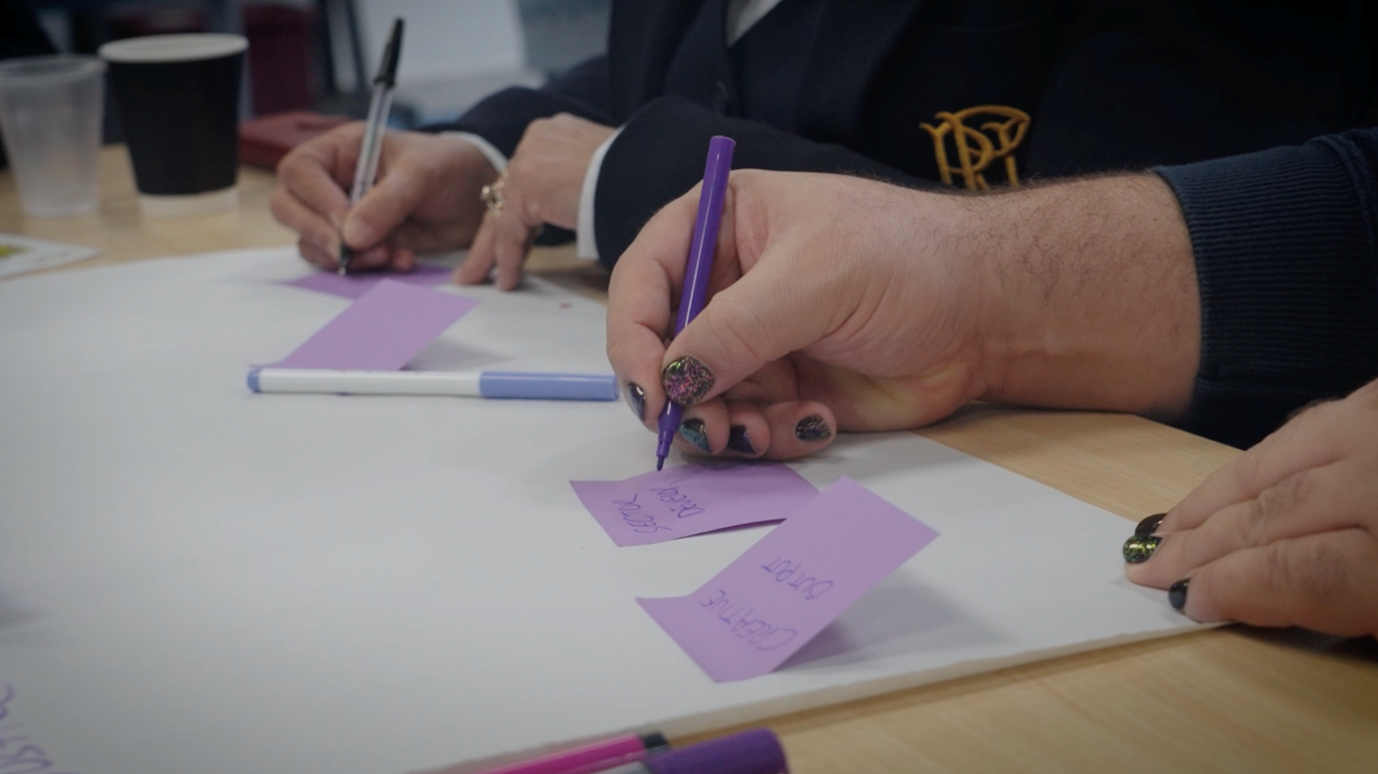
We wanted to ensure that the peer researchers were involved in all aspects of doing research. This included data analysis, which is sometimes seen as drier and harder to conduct in a participatory fashion than things such as interviewing. In this instance, the peer researchers were actively interested, perhaps recognising this as a moment to influence meaning making, or because of their intrinsic interest in the questions at hand. We structured analysis to include both individual and group reflection, with careful facilitation.
Analysing data allowed me to get a good insight into participants’ views. Working on the data individually and then as a group worked very well as we came up with key themes. The facilitation led by Clare worked very well and allowed us to analyse the data in a number of useful ways. (Shamila, peer researcher)
This comment describes how peer researchers recognised that they possessed particular and relevant skills. They also valued how those were being employed for something they felt was useful and important. They also appreciated working with like-minded peers:
Because we listened to each peer when we came together with all the data, the job felt so easy. Whether we agreed or disagreed, the environment was respectful, friendly and open to feedback. (Kimia, peer researcher)
This suggests a pleasure in the analytic process, turning something sometimes viewed as a chore into a moment of collaborative joy.

Collaborative analysis
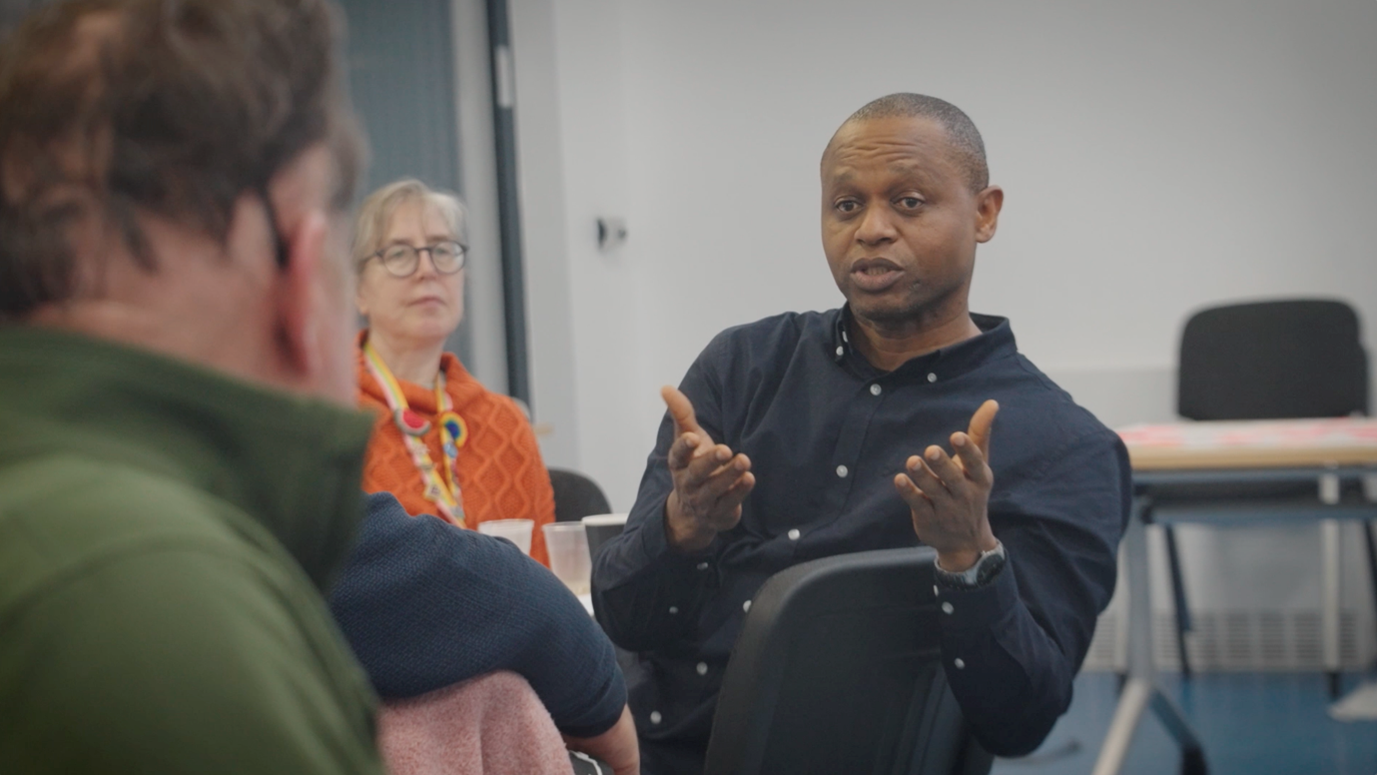
A key part of our research was a series of three People’s Assemblies, based on the interview data analysed by the peer researchers. For the peer researchers, these were important moments of public recognition and engagement.
These forums allowed us to take our findings back to the community, and it was great to meet everyone. It was great to get to know the creatives in person and watch them create art to explain their views. (Shamila, peer researcher)
Getting to discuss cultural leadership gave me a lot of insight. It allowed people to share their voice and feel heard. Hearing what they had to say, writing down notes and interacting with everyone was truly amazing. (Kimia, peer researcher)
While the People’s Assemblies were designed to contribute to the development of policy impacts, these responses encourage us to recognise the value experienced in the process itself. The value, that is, of providing spaces in which people can share and listen to each other about things that are important to them and about which they hold specialist knowledge.
The Challenges of Time
Working with peer researchers brings clear benefits and pleasures, yet time, scheduling and availability represented a recurring challenge. One peer researcher co-designed questions and co-analysed data but couldn’t conduct interviews due to limits on their availability. This is at once a mundane reality, faced by anybody who has ever organised a meeting. Yet it has particular significance when working with peer researchers and conducting community research.
While payment is important ethically and for recognition, peer researchers aren’t employees where payment enables absolute availability. The result is an interestingly non-transactional relationship, that needs to recognise that peer researchers’ labour (in both emotional and structural terms) differs from that of career researchers. This requires flexing with the spirit of meaningful community engagement.
If we wish to work with a peer researchers – never a homogenous entity, but a multiplicity of individuals who bring valuable insights, connections and lived experience – we must, in turn, be prepared to park our assumptions about rigid structures and ways of proceeding.
Partners











Related post

“Gerrin’ on wi’ it” podcast series – episode 9
In this episode of Gerrin' on wi' it, guests Rich Crisp from Sheffield Hallam University and TJ Clark from the...

Chain Lane – Evidencing Strength-Based Community Led Social Action
This report presents an analysis of Chain Lane Community Hubʼs ways of working, examining whether and how they support and...

“Gerrin’ on wi’ it” podcast series – episode 8
In this episode of Gerrin’ On Wi’ It on the Research and Innovation Podcast, host Lauren Cox is joined by...
“Gerrin’ on wi’ it” podcast series – episode 7
In this episode of Gerrin’ On Wit’ It, host Lauren Cox sits down with Kayleigh Renberg-Fawcett, Place Team Lead at...

Communities in their Places: A review of example social action across the Yorkshire region
This report presents a comparative review of 112 social action initiatives in the Yorkshire and Humber region.

Yorkshire and Humber communities talking climate
The Yorkshire and Humber Climate Commission (YHCC) and YPIP facilitated an online Share&Learn lunch session on “talking climate” for community...