
Working Together for Fairer Recruitment
Uncategorized Tuesday 20 January 2026
Creating space for employers and multicultural communities to better understand each other
By Belen Martinez, Sheffield Hallam University
In November 2025, our work package team focusing on ‘Good Work and Better Business’ delivered a series of three workshops with around 20 participants in each session, bringing together Roshni participants and employers from across Yorkshire, using academic frameworks on cultural intelligence to guide our conversations. This workshop series was developed through four months of collaboration between the WP2a team at Sheffield Hallam, Professor Anya Louis at Sheffield Hallam Business School, Rachael Farrell at South Yorkshire Community Foundation (SYCF), and Farzana Camran at Roshni.
These interactive workshops brought together local employers and members of Roshni, a South Asian Women’s Resource Centre in Sheffield, to explore how we can work together to make recruitment processes more inclusive. To respect the cultural preferences of participants and create a trusting environment, the workshops took place in a women-only space.
Developing and delivering this work required time, care, and the building of trusted relationships; essential foundations for creating spaces where honest, and sometimes difficult, conversations can happen safely and constructively.
The workshop had three sessions:
Session 1 – Understanding Cultural Intelligence
Our first session, held with Roshni participants only, introduced key Cultural Intelligence concepts that helped frame how people can interact positively across differences in nationality, language, and cultural background. Although we drew on theory, most of our time was spent in conversation, looking at how people with strong Cultural Intelligence navigate differences and discussing how stereotypes can sometimes act as useful shortcuts but often become unhelpful barriers.
Session 2 – Building Bridges with Employers
In the second session, we brought employers into the room. We revisited the same frameworks and used them as a basis for sharing experiences from both sides of the hiring process. Together, we explored what makes an intercultural exchange feel positive and meaningful, and what curiosity looks like in practice when aiming to connect with ‘the person behind the stereotype’. Participants then began ‘building bridges’ by identifying shared values, experiences, and goals across the group.
Session 3 – Communication, Barriers, and Recruitment
Our final session returned to the role of language and communication: how misunderstandings arise, who holds responsibility for clarity in a multicultural exchange, and what strategies help make communication more equitable. We closed the series with an in-depth conversation about recruitment experiences. Roshni participants shared both positive and challenging moments from their job-seeking experiences, along with their vision of what ‘good’ and inclusive recruitment looks like. Employers, in turn, explained what they look for in CVs and interviews, and what allowances they can make in their processes to support more inclusive recruitment.
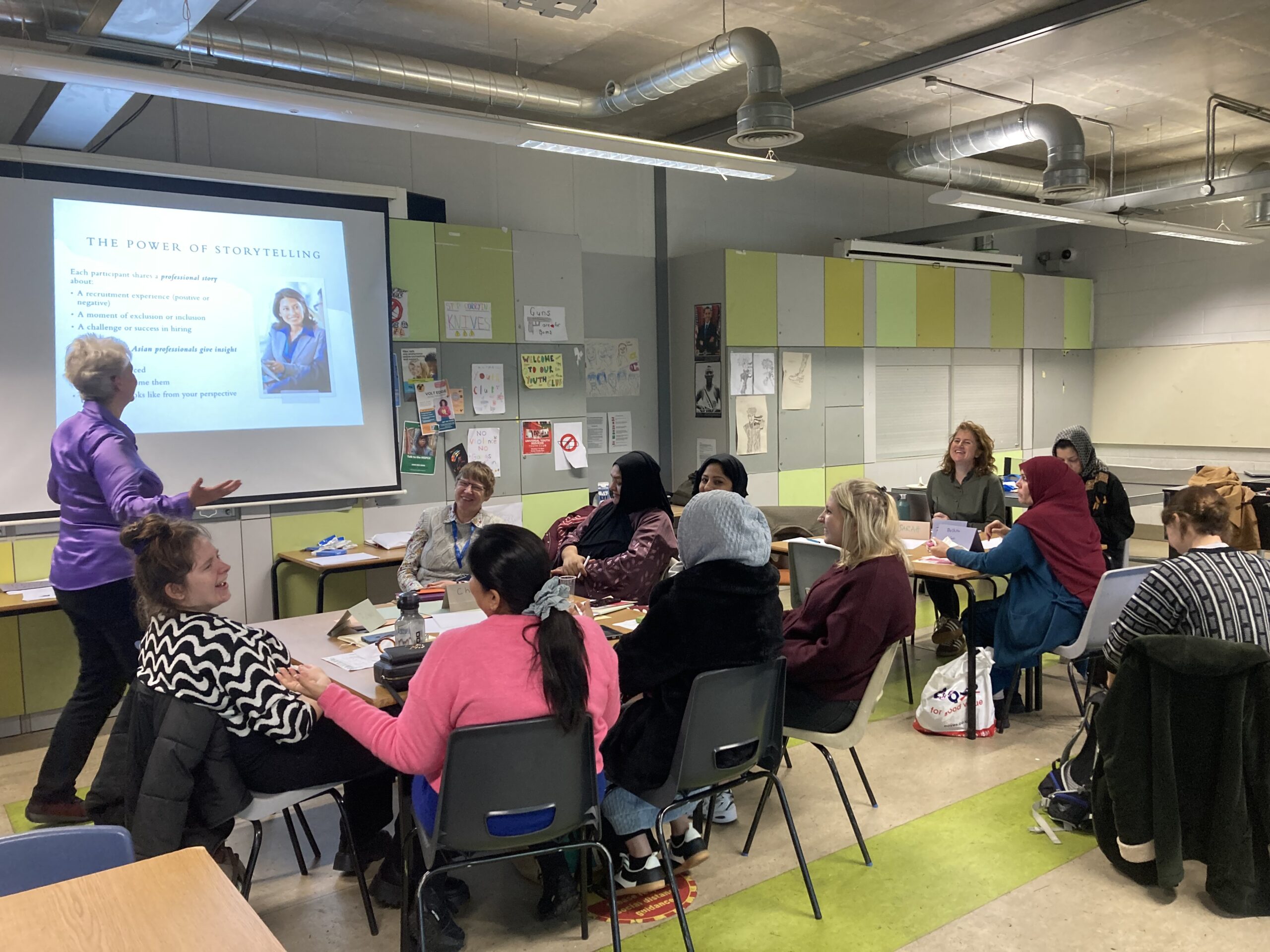
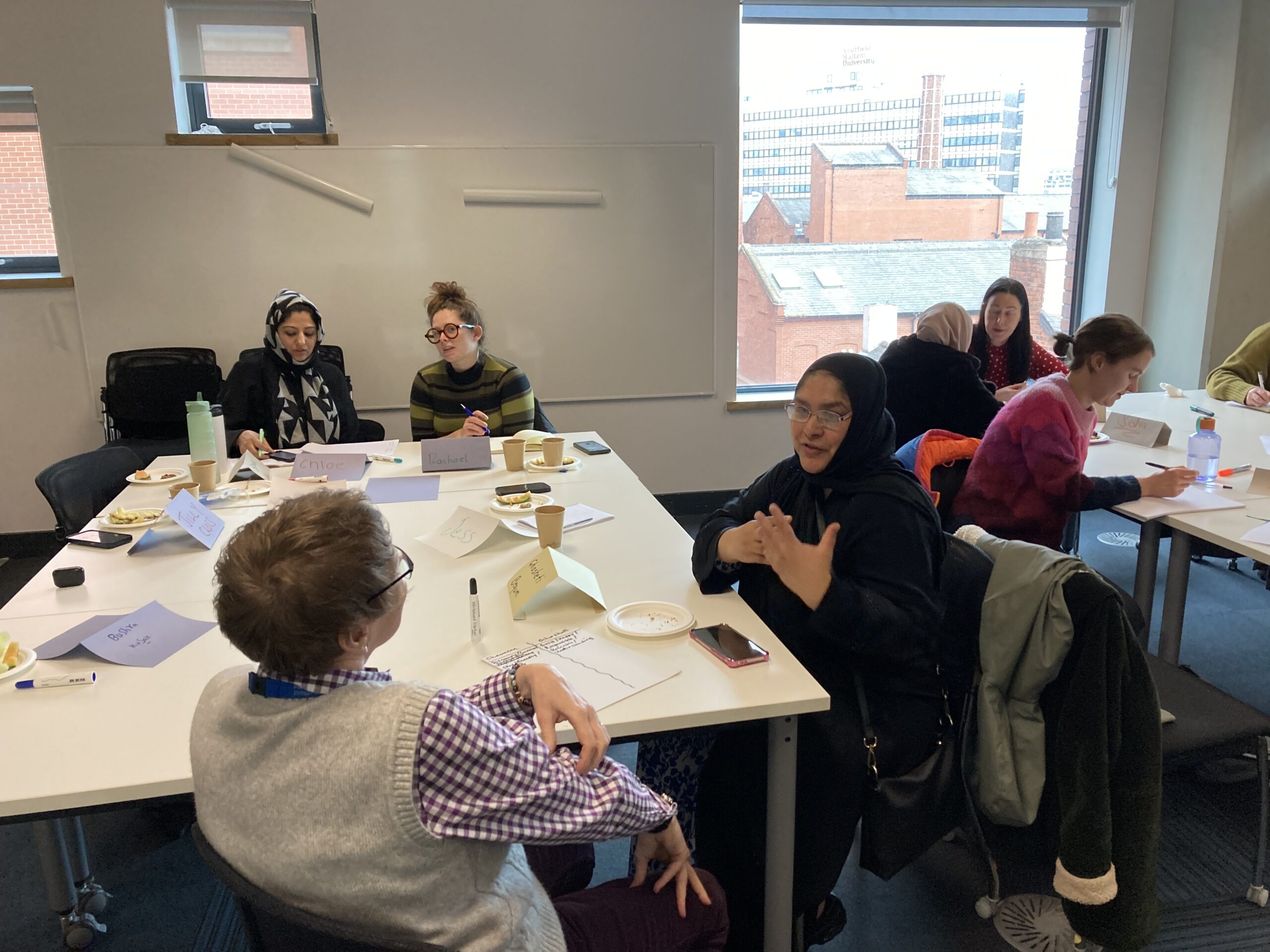
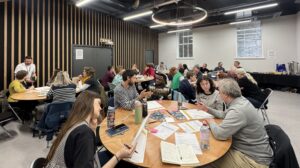
Images above: workshop participants working together to better understand one another and to discuss cultural intelligence for inclusive recruitment
Across the three workshops, participants and employers built confidence, deepened mutual understanding, and developed practical ideas for making recruitment, and everyday interactions, more inclusive. Much of this was made possible because of the strong partnerships and trust developed throughout the workshops.
All participants will be awarded a certificate celebrating the skills, insight, and openness they brought to the workshops. The certificate names them as Intercultural Ambassadors, recognising their role in helping to build more inclusive conversations, workplaces, and communities.
Get in touch with Belen if you’d like to learn more about this initiative and the wider ‘Good Work and Better Business’ work package.
Partners

Related post
Foundations for Impact: Beginning Our Evaluation With Collaboration and Clarity
On Monday 23 March, we kicked off the evaluation process with an initial immersive workshop which centred around connecting, sharing...
‘Keep hope alive’: The Yorkshire Policy Innovation Partnership, past and present
This blog entry provides an overview of YPIP’s past and present - what brought YPIP into being, and what YPIP...
“Gerrin on wi’ it” podcast series – episode 6
Paul Hayes speaks with Kersten England CBE about how collaboration drives meaningful change across Yorkshire and the Humber.
“Gerrin’ on wi’ it” podcast series – episode 5
Paul Hayes sits down with community leader Kate Macdonald to explore what genuine cross‑sector collaboration really looks like in Yorkshire...
YPIP Highlights in 2025
This is a snapshot of the key activities, events, and initiatives completed during our first operational year.
“Gerrin’ on wi’ it” podcast series – episode 4
Y-PERN Policy Fellow Dan Olner discusses his dual role as both university researcher and embedded policy analyst, explaining how he...