
Reflections from YPIP: prioritising the needs and priorities of partners and communities (and why it’s worth it)
Uncategorized Wednesday 5 November 2025
By Rich Crisp and Belen Martinez, Sheffield Hallam University
Co-designing an inclusive and sustainable economy
Designing and delivering a project to help create a more ‘inclusive and sustainable economy’ across a region of five million people is no small task. Add in the need to make sure communities and partners shape that design so it genuinely reflects their priorities, and things get a bit harder. Then throw in the ambition to test and scale policy innovation along the way, and you’ve got quite a job on your hands.
This was the challenge our team took on when we embarked on the Yorkshire Policy Innovation Partnership (YPIP). At its heart, YPIP is about doing things differently: starting with what matters most to people and organisations across the region rather than university-led research ideas.
For those of us used to more standard research projects, this is a significant shift. It requires us to be more flexible, listen closely, rethink our plans, and let partners’ perspectives shape our research. It hasn’t always been easy, but it’s deeply rewarding. We’ve learnt a lot along the way from the (mis)steps we’ve taken and the hurdles we’ve overcome. This has all helped to strengthen and focus our work. Three points of learning stand out.
1. Effective engagement takes time
Our journey began with listening. Before we even wrote our funding bid, we held workshops and conversations with a wide range of stakeholders (local authorities, community organisations, businesses, and residents) to understand their priorities. Those early discussions shaped everything that came after. Through this, we identified ‘good work and better business’ as one of the four thematic priorities that underpins YPIP alongside a cross-cutting strand theme on community engagement.
Good engagement takes time. This sounds like a truism, but the point we’re making here is that there is no obvious endpoint. Partners and communities all have unique experiences to share and suggestions for research that addresses their priorities. We assumed, wrongly, that engagement would reach a saturation point, enabling us to draw a line under consultation and embark on our research. Instead, we found our own curiosity and the ever-new insights we heard means our understanding of the good work agenda and the role of business within it continues to evolve.
Of course, we have had to find time to carry out research. We’re currently working with partners to explore best practice in inclusive recruitment, what good work means in the social care sector, and opportunities to embed inclusion goals into mainstream business support. But this has happened alongside our continual dialogue with key partners, which we’ve maintained (at the expense of our diaries) as an enriching source of knowledge and ongoing research opportunities.
2. Find your spark
Over the course of well over a hundred conversations so far, we’ve heard a wealth of ideas and insights. But what’s often made the most significant difference is finding that spark – the passion, commitment, and energy of a few individuals, which has driven our project forward.
For example, an invitation to feed questions into a consultation exercise carried out by a key partner (the South Yorkshire Community Foundation) led to a rich report from an SYCF staff member. This highlighted key barriers to employment faced by members of community groups that SYCF support. It revealed gaps in the expectations of employers who often underestimate the experience, expertise and capabilities of ‘disadvantaged’ groups whose potential value as employees is overlooked. Working closely with SYCF, this inspired an ongoing series of workshops that brings together women from a South Asian women’s support group (Roshni) and potential employers. These sessions seek to challenge misconceptions through building ‘cultural intelligence’ as the basis for co-creating more inclusive recruitment pathways.
Like all good collaborations, it grew from a small spark of curiosity into something bigger and more meaningful.
3. Be willing to let go
In academic research, we are trained to plan everything carefully and in a linear way: reviewing existing literature, identifying gaps in knowledge, designing our methods, and embarking on fieldwork. The partner and community-led ethos of YPIP demands a different and more responsive approach, where a chance conversation or personal experience may trigger inspiration for research.
One moment that stands out came from a discussion with a member of YPIP’s community panel with lived experience of disability who directly employs a personal assistant (PA). This helped us see the unique nature of that employment relationship as well as the opportunities and challenges this presents in providing good work. It led us to realise that this working relationship, common in social care, doesn’t fit neatly into existing frameworks of good work. These largely assume a standard employer-employee relationship in specific places of work.
Following this conversation, we have begun co-designing a research project that draws on their lived experience. We will, of course, dig deeper into past research to check our sense of the ‘gap’ in knowledge is correct, but not in the neat linear fashion of standard research. Instead, we begin with real-life experiences, and build the research around them.
Embracing the challenge and looking ahead
Working in this way brings its own pressures. Our team is small, and there is no shortage of good ideas or partners keen to collaborate. The hardest part is choosing where to focus on and being honest about what we can realistically take on.
Sometimes partnerships don’t move forward or potential projects lose momentum as circumstances change.
Businesses can also be hard to engage given the demands they face. They are a vital part of the ‘good work’ agenda, but understandably cautious about committing time to research. Still, persistence is starting to pay off now with access to employers to research and showcase innovative inclusive recruitment practices. However, it slows down the pace of our research.
As we move forward, we’re focusing on building on what we’ve started — strengthening relationships, refining our projects, and sharing what we learn along the way. Working together with partners and communities isn’t always easy or quick, but each conversation teaches us something new. The early stages of YPIP were about gathering ingredients; now we’re finding the right balance of flavours. It’s time-consuming, sometimes messy work, but if we get it right, the result will be richer, inclusive, and shaped by the people it’s meant to serve.
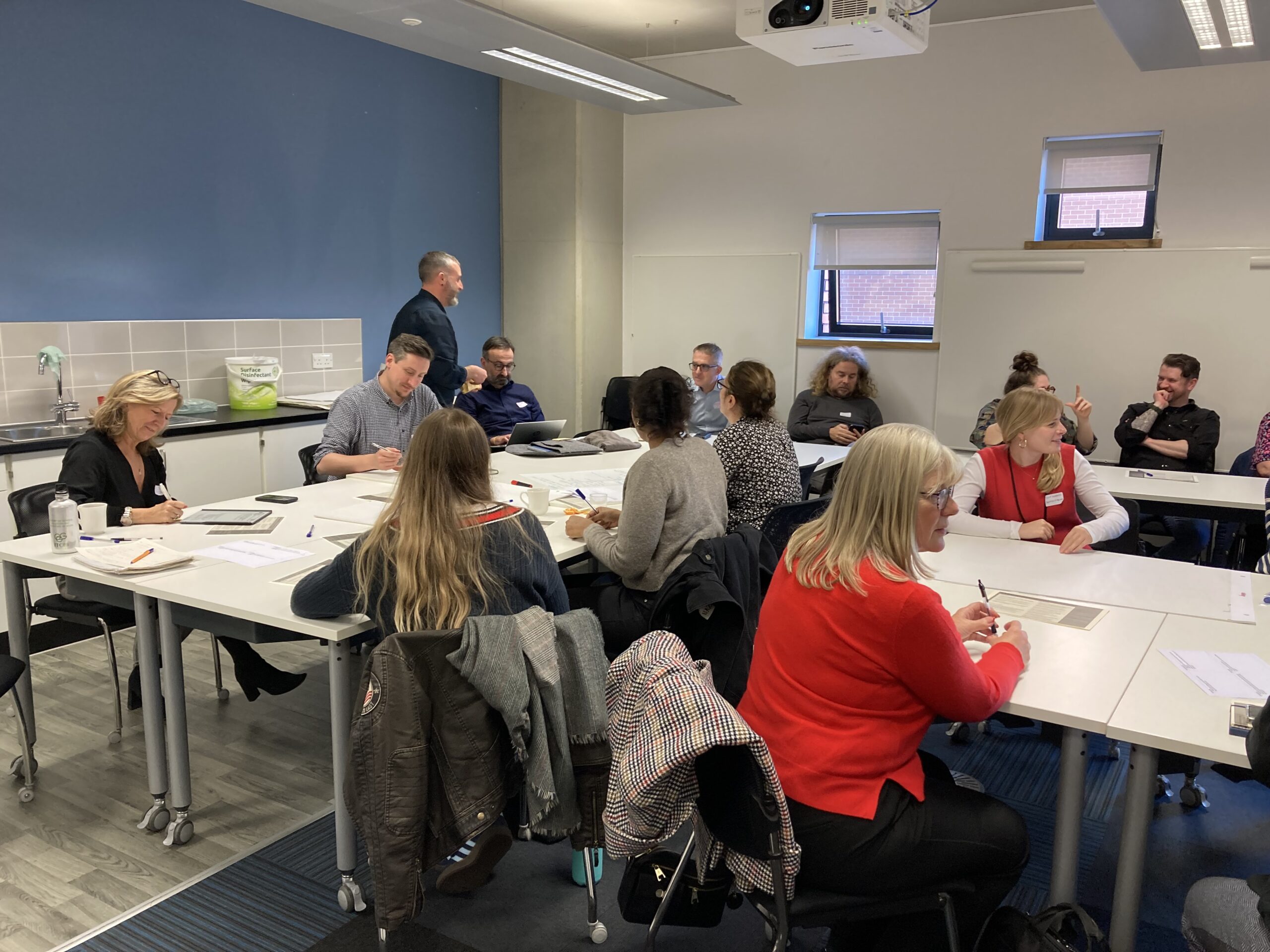
Attendees engaging in discussion to help map out the 'Good Work and Better Business' work package
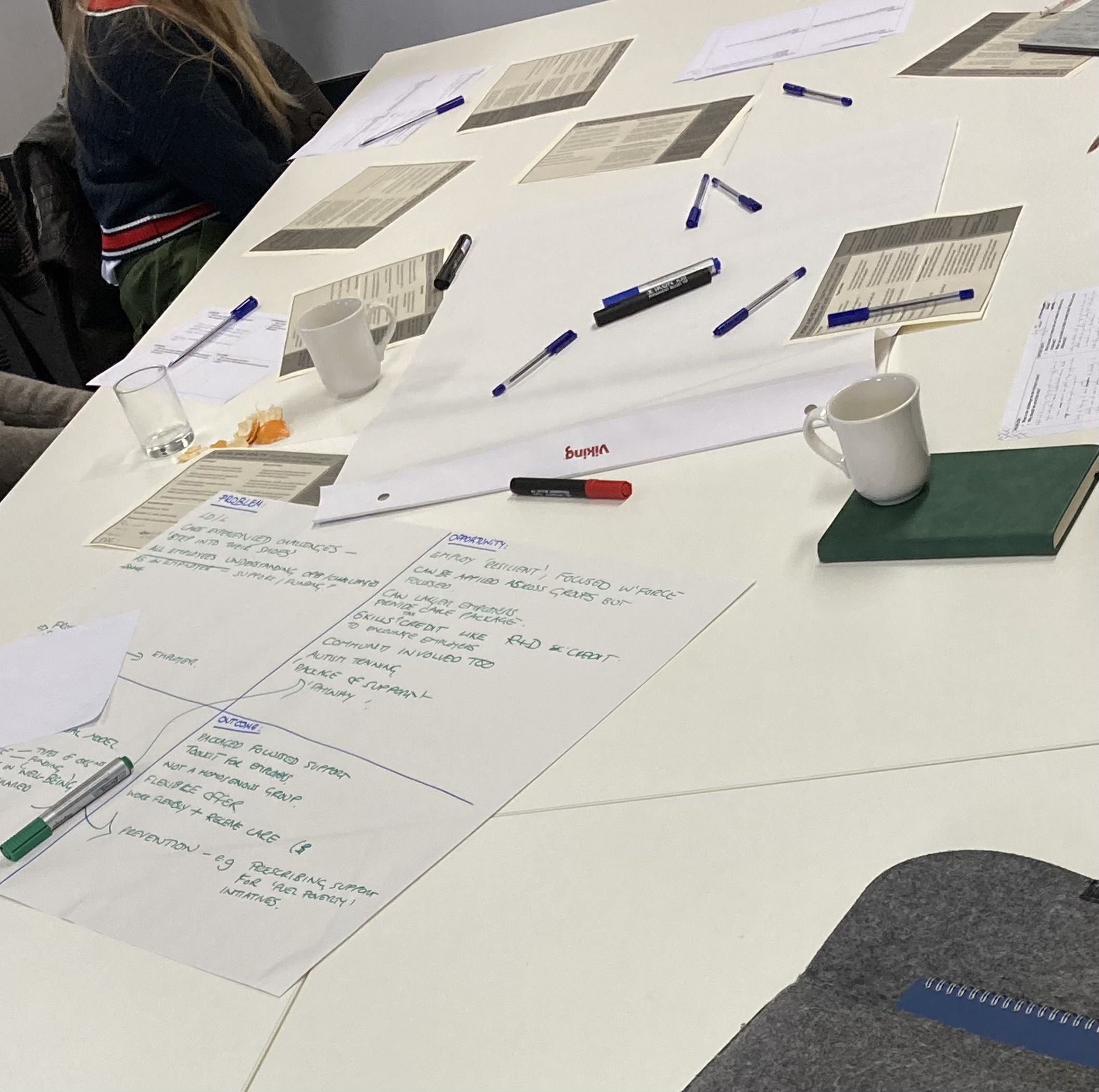
Notes and ideas for work package priorities
Partners










Related post

“Gerrin’ on wi’ it” podcast series – episode 9
In this episode of Gerrin' on wi' it, guests Rich Crisp from Sheffield Hallam University and TJ Clark from the...

Chain Lane – Evidencing Strength-Based Community Led Social Action
This report presents an analysis of Chain Lane Community Hubʼs ways of working, examining whether and how they support and...

“Gerrin’ on wi’ it” podcast series – episode 8
In this episode of Gerrin’ On Wi’ It on the Research and Innovation Podcast, host Lauren Cox is joined by...

Knowledge, Collaboration and Time: Reflections on Working with Peer Researchers
In this blog, academic researchers Matthew Reason and Clare Danek consider the role of peer researchers within their Communities Innovating...
“Gerrin’ on wi’ it” podcast series – episode 7
In this episode of Gerrin’ On Wit’ It, host Lauren Cox sits down with Kayleigh Renberg-Fawcett, Place Team Lead at...

Communities in their Places: A review of example social action across the Yorkshire region
This report presents a comparative review of 112 social action initiatives in the Yorkshire and Humber region.