
Only as strong as the ground beneath us: Ensuring collaboration between academics, policymakers and communities can last
Uncategorized Wednesday 26 November 2025
By Ciaran Cummins
Ciaran Cummins is an Engagement Lead at Involve, the UK’s leading public participation charity. Involve are supporting engagement efforts across the LPIP hubs through training and advice. Here he reflects on the recent YPIP ‘Not Another Toolkit’ event and what it highlights about the importance of creating conditions that allow collaboration with the public to last.
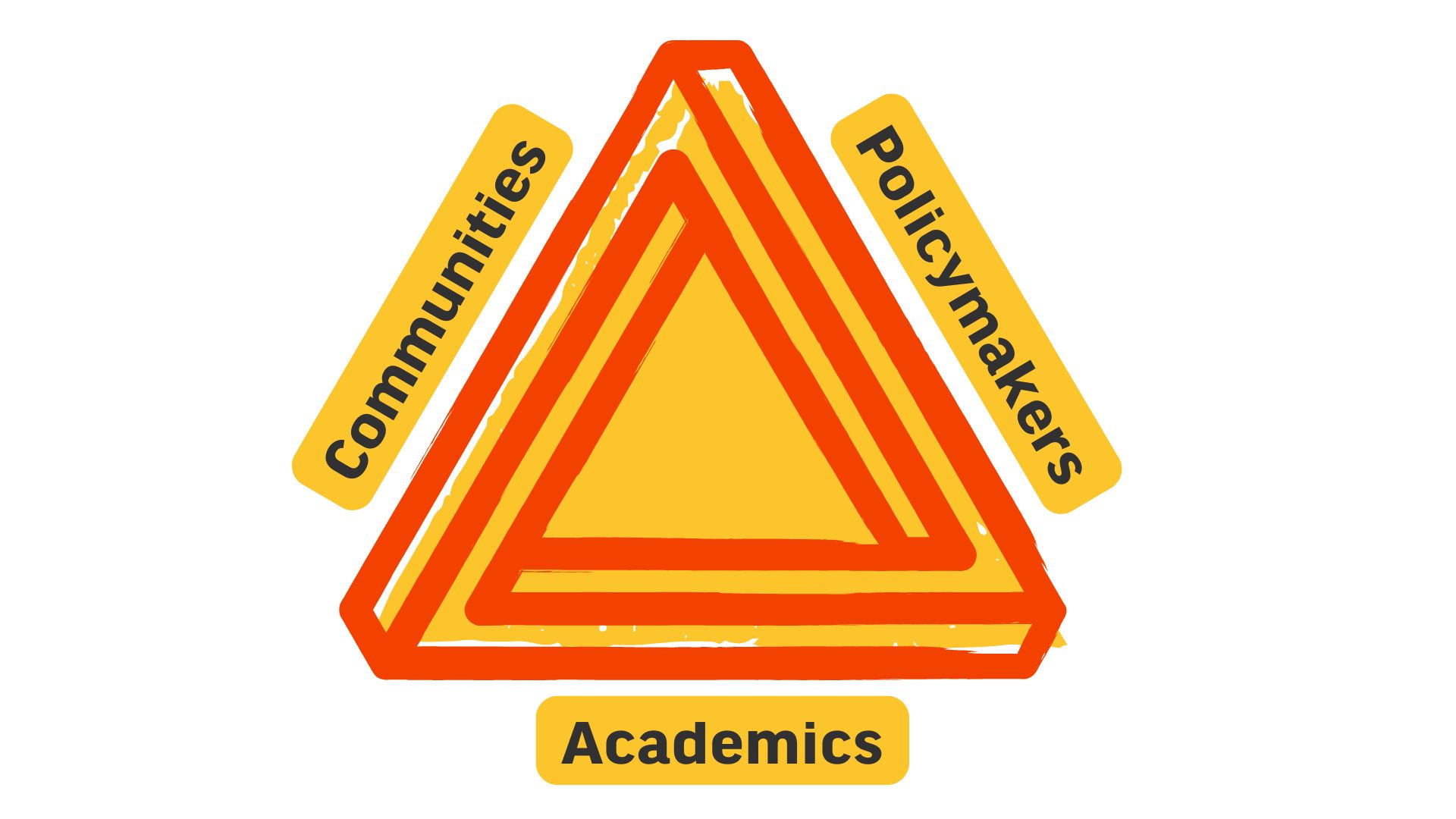
Triangles are the strongest shape, it’s why you’ll see them in the structures we really need to stay up, from railway bridges to roofs. Yet, however strong these structures are internally, they still need the ground beneath to be built upon in the first place, and they need this to remain firmly in place if they are to last.
Collaborations between academics, policymakers and the public are no different. They are complex partnerships held together by good relationships that take time to develop, that rely in turn on certain foundations being in place to allow these relationships to be constructed and maintained.
So, what exactly are these foundations? A recent event run by the Yorkshire Policy Innovation Partnership (YPIP) can begin to offer some clues.
Creating trust
In October, YPIP convened members of its Community Panel alongside academics, representatives from statutory bodies, and local voluntary and community sector organisations. Alongside these were the YPIP team itself and supporting organisations including Involve.
The function of YPIP, and LPIP as a whole, is to harness the power of collaborative research to address local challenges with informed policymaking. The day’s event was exploring barriers to making this work. What stops this kind of collaboration and what could overcome these challenges? From demystifying how exactly community groups can influence decision-makers in local government, to the need to train researchers on how to work with the public, much was discussed. A recurring question was “what is needed to build trust between collaborators?”
A recurring question was “what is needed to build trust between collaborators?”
A key ingredient identified was time, since constraints here hinder opportunities to develop trust in others. For example, when funders do not value this part of research, academics’ engagement can become box-ticking exercises; arriving in communities they’ve established little connection with, taking what they need, then leaving – hardly a good way to build trust.
Creating foundations
Time matters to the foundations for collaboration, but that’s not all. At the YPIP event, I spoke to trends in the triangle partnerships between academia, statutory bodies and the public. I drew out how many across the UK are trying to move beyond the kind of one-off engagements I mentioned above, by looking at the conditions that can sustain ongoing interaction.
One example I gave is the Black South West Network (BSWN), which supports racially minoritised communities, businesses, and organisations in the region to flourish whilst challenging systemic barriers. It does this in a variety of ways, including as the lead for a regional community-led research network. It also hosts events that, among other things, focus on bringing together local people and decision makers, to “improve that relationship between the people in power and the communities they represent and serve.”
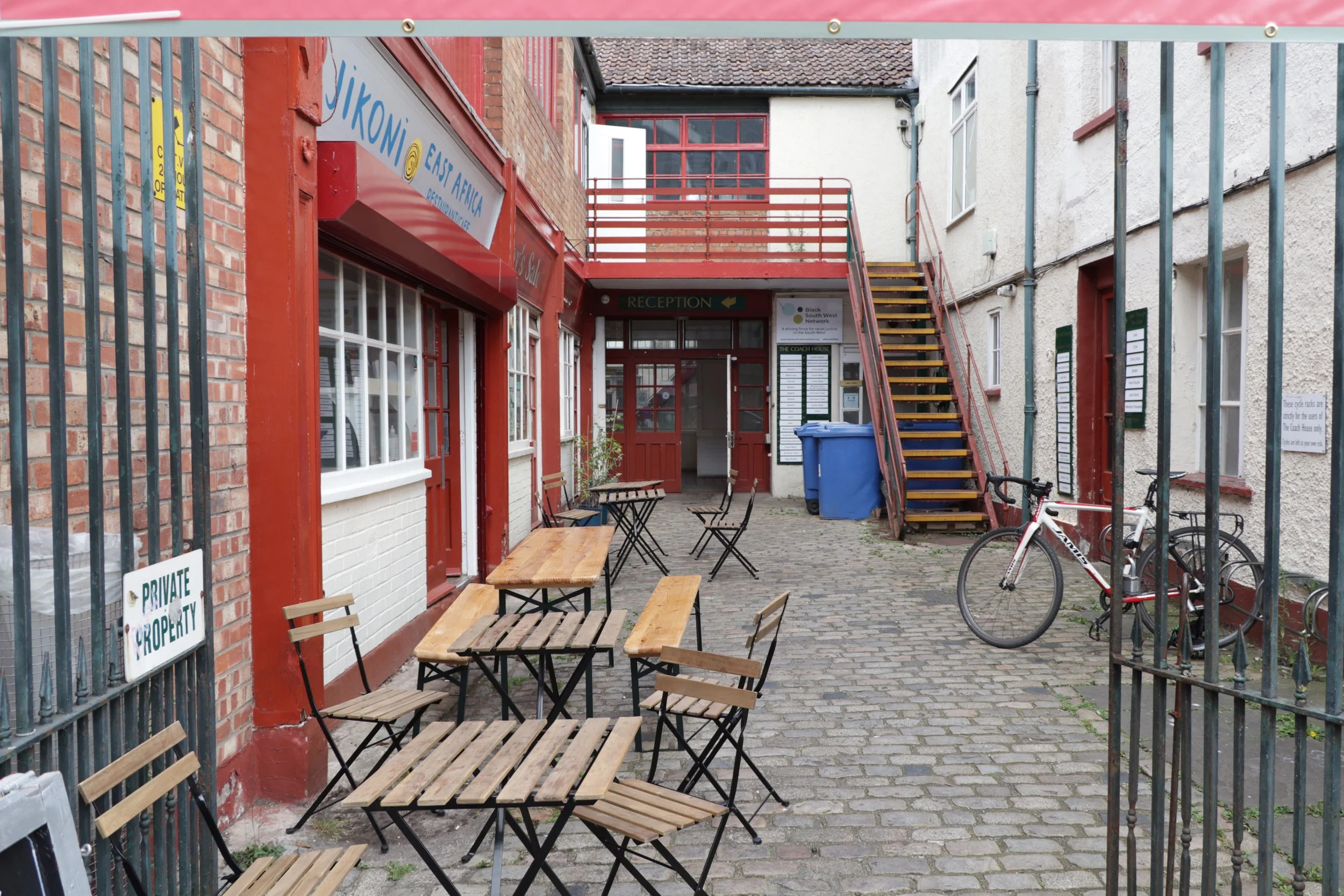
Image above: The Black South West Network’s Coach House. Credit: BSWN.
To convene people in this way doesn’t just take time, it also takes space. BSWN’s CEO, Sado Jirde, has spoken of how the communities they work with did not have sufficient physical stake locally to “respond to the needs of now and the future”. To counteract this, they sought a community asset transfer and in 2023 were granted a 125-year lease from Bristol City Council. This meant the charity could take over and run The Coach House, a building in the city’s St Paul’s area.
BSWN, rooted in particular communities, forms one part of a triangle of collaboration when it has worked alongside academia and public bodies. YPIP begins from a different place, beginning in academia and reaching out to collaborate. This means it has assets in place – like physical space – that others cannot immediately leverage. Of course, academia faces its own constraints, but as YPIP’s Lauren Cox and Y-PERN’s Kate Winship note, it has the capacity to convene people in a way that isn’t open to others. One value of an initiative like LPIP is the opportunity it creates to share these resources that can lay the foundations for relationship-building.
At the same time, no one partner is more worthy because of the resources they have: whether they are providing space, funds, time, networks, or knowledge, these are all necessary for building trusting collaborations. The important thing is to work out how collaborators can combine strengths, and do so in a way that supports sustainability. Bec Riley, Director of the LPIP hub, and Co-Director of City-REDI, a University of Birmingham-based research institute, has written about just this. Drawing on City-REDI’s experience of an LPIP precursor, she identifies both what strengthens collaborations internally – such as secondments between partners – and the wider conditions – such as flexible funding models.
Creating movements
Trust is at the heart of making collaborations between academia, public bodies, and communities work, and we have identified some of the foundations needed to foster this trust, such as access to time and space. We’ve also brought out how collaborations can act as a way to pool resources, supporting each side of the triangle. I think if we stop there though, we’re missing a trick.
Through BSWN’s acquisition of The Coach House, Jirde has spoken of how this brought their organisation’s work into contact with ‘community wealth building’ (CWB), an approach to economic development that retains more wealth for the benefit of local people. The Centre for Local Economic Strategies (CLES) – who, like Involve, are supporting the LPIP network – are at the heart of the CWB movement in the UK. In coming into the orbit of CWB, this could spur further collaboration.
I highlight this because it brings out a more general point: efforts to improve the foundations for state-academic-public collaborations can tap into even wider actors and movements (and the resources at their disposal in turn). Some of these are similarly concerned with improving trust, for example between public services and people or galleries and visitors. Others are focused on the conditions themselves which can in turn support relationship-building, like access to space on our high streets, ownership of community assets, access to greater free time and financial backing to organise communities.
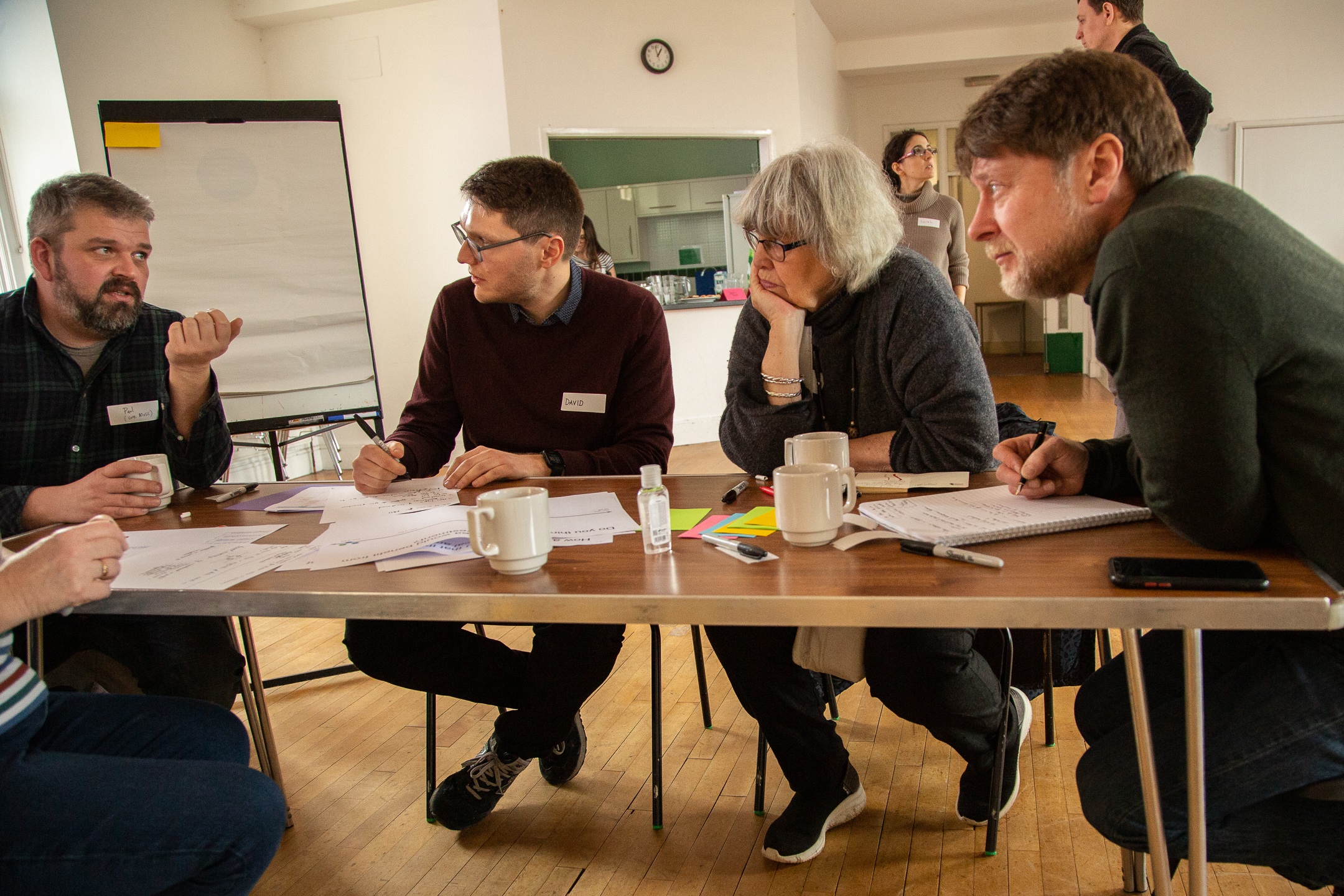
Image above: Residents in Hexham shaping Involve’s 2023 guidance for community engagement for place-based investment. These discussions brought together residents, local representatives and local investors to collaborate.
It’s understandable to focus on the internal efforts of building up a triangle of collaboration, given what this alone requires. But it is precisely because building trusting relationships is demanding, slow, fragile work that we need to support the ground beneath it too. One important way to do this is to connect with wider movements pushing for the same conditions that can foster connection.
Without this attention to sustainability, our efforts to build up a strong collaboration can go to waste, further eroding trust if people suddenly see researchers and public bodies have to pull away. This is something many people have a historical memory of occurring time and again, as the next blog in this series will attest from a YPIP Community Panel member.
Creating momentum
YPIP’s convening event has been a catalyst. Attendees reconvened recently to look at how an example of a collaboration focused on equitable and inclusive health research in South Yorkshire could guide wider collaborations between academia, policymakers and communities in the region. Involve is continuing to support here, and with the wider YPIP network. This includes advising on the design of participatory processes in YPIP’s community-led research, like the assemblies that will be used in the Understanding Community-led Culture in Bradford and Keighley project.
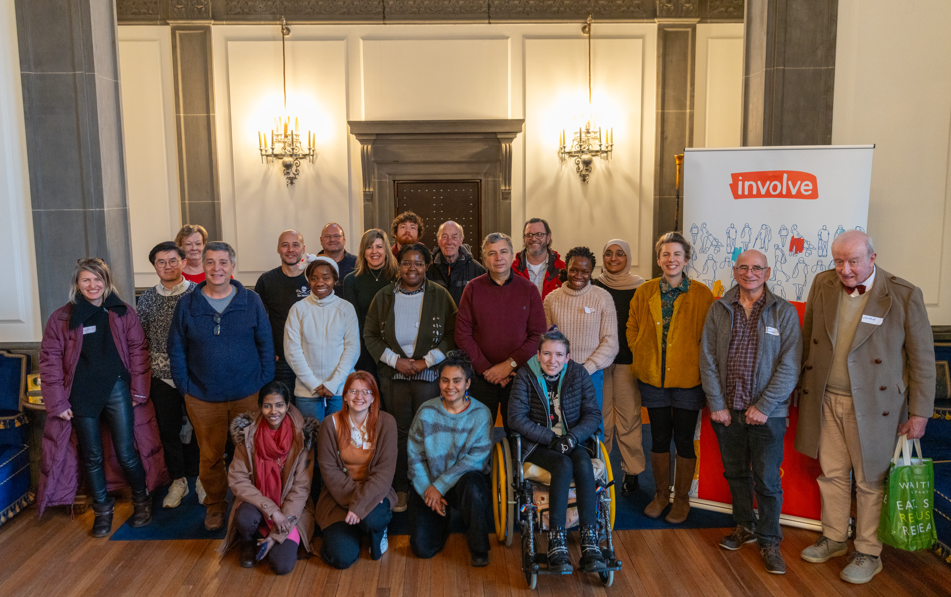
Image above: Participants in a 2023 Southampton climate assembly led by Involve, commissioned by the city council in collaboration with the University of Southampton and University of Oxford.
Involve are working with hubs across the LPIP network to build capacity for effective community engagement. Whether you need training for your team on deliberative methods, mentoring support as you design engagement processes, or help developing a whole-organisation approach to working with communities, we’re here to help. Get in touch to talk through what would be most useful, or start by exploring our free resources on participatory methods and measuring their impacts.
Beyond this, we want to help the LPIP network understand how to sustain good collaborations. To that end, three questions stand out to us which we intend to work with each hub to answer:
- What can you take from previous experiences of successful collaboration?
- What are you learning from your own collaboration that feels unique?
- Who is seeking the same conditions you are that can support your collaboration long-term?
Let’s keep the momentum going and ensure that together we lay the foundations to allow communities, public bodies, and academia to collaborate long-term.
Check out the summary notes from the first ‘Not another toolkit’ session in September here
This blog is second in the series of blogs following on from our policy session. Next up is: ‘Deja Vu Governance – Reflections on the ineffective, cyclical process of central government policy making and funding, the impact this has on sustainability and public trust, and advice for the future from an experienced West Yorkshire community activist’
Partners











Related post

“Gerrin’ on wi’ it” podcast series – episode 9
In this episode of Gerrin' on wi' it, guests Rich Crisp from Sheffield Hallam University and TJ Clark from the...

Chain Lane – Evidencing Strength-Based Community Led Social Action
This report presents an analysis of Chain Lane Community Hubʼs ways of working, examining whether and how they support and...

“Gerrin’ on wi’ it” podcast series – episode 8
In this episode of Gerrin’ On Wi’ It on the Research and Innovation Podcast, host Lauren Cox is joined by...

Knowledge, Collaboration and Time: Reflections on Working with Peer Researchers
In this blog, academic researchers Matthew Reason and Clare Danek consider the role of peer researchers within their Communities Innovating...
“Gerrin’ on wi’ it” podcast series – episode 7
In this episode of Gerrin’ On Wit’ It, host Lauren Cox sits down with Kayleigh Renberg-Fawcett, Place Team Lead at...

Communities in their Places: A review of example social action across the Yorkshire region
This report presents a comparative review of 112 social action initiatives in the Yorkshire and Humber region.