
Déjà Vu Governance
Uncategorized Wednesday 10 December 2025
Written by Robbie Martin and edited by Kate Winship and Lauren Cox
Robbie Martin ran a campaign to establish a Town Council for Shipley and has worked with community groups since the late 1970’s.
Reflections on the ineffective, cyclical process of central government policy making and funding, the impact this has on sustainability and public trust, and advice for the future from an experienced West Yorkshire community activist
My name is Robbie, and I recently attended YPIP’s “Not another toolkit” discussion session. I am part of the YPIP Community Panel and received the invite to this session to have representation from our diverse panel group and to include community voice in these discussions. I have felt to be a victim of changes to policies being delivered merely as way a of cutting costs and dressed up as efficiency measures with no tangible improvement for the people the policies are supposed to help.
I’ve been retired for over ten years, but I still like to stay involved in community organisations. My journey with government schemes started in 1982 when I was elected to Bradford Metropolitan Council. I became chair of the Housing Committee and was especially interested in housing for Gypsy and Traveller communities.
The news today (25th September 2025) has announced “Pride in Place” – a government scheme that provides grants of £2m annually for the next decade to selected communities such as Holme Wood in Bradford, with local people deciding how it’s spent. Communities are going to be given more powers to decide what sort of businesses are allowed to be on the High Street.
I thought to myself, “That sounds familiar!?” Because thirty-five years ago, City Challenge offered the same thing!
The same old government initiative
Over the years I’ve seen a parade of government initiatives aimed at rejuvenating run-down areas and tackling unemployment. All with varying degrees of success.
The first initiative I remember is the Manpower Services Commission in 1974 – its aim being to coordinate vocational training and manage employment; then came the Youth Opportunities Programme in 1977 which meant that companies got free labour for six months and young people got work experience.
This was followed by City Challenge in the early 90s which emphasised asking the public what it wanted – Holme Wood asked for a swimming pool, but the ongoing costs were too high for the community’s wishes to be granted. There was initial funding which community organisations could bid to from the City Challenge board. However, the funding ran out.
The Single Regeneration Budget (SRB), a UK government fund from 1994 to 2002, superseded City Challenge. Bradford had a pilot scheme which was positive and had the intention of giving a significant voice to local communities. SRB schemes were established in many communities. To receive funding, community and voluntary groups needed to send in bids to the SRB board. Voluntary groups had the edge because they generally had more resources such as skilled bid-writers. The language required to be used in the bids constantly changed, if you didn’t use the current buzz words you were not going to be successful. Bid writing workshops were held but having the time and resource to attend them was limited for volunteers. If I had to pick, of them all, I would say that the Single Regeneration Budget (SRB) gave the most control to “the community”. However, funding is never sustained to allow for embedding and sustainability of these initiatives. ‘Trident’, an SRB project in Bradford, has been quite successful but now the initial funding has run out and securing more is becoming more difficult.
All these initiatives, like the new “Pride in Place” initiative had the objective of “rejuvenating run-down areas” and tackling unemployment. The cynic in me cannot help but think that Governments are more interested in publicity about what they are about to do and so stop funding programmes that are already working. They start up another initiative, regardless of whether it is better than what it replaces, because this gives the impression of “doing something about it”.
Bradford Community Broadcasting (BCB) – An example of funding ups and downs over three decades
In 1994, I helped set up Bradford Community Broadcasting (BCB) as a co-operative using a grant from the European Social Fund (ESF) with match funding from Bradford Community College. BCB was initially funded to train unemployed people in media skills. Over the years it has been kept afloat with varying levels of staff depending on grants are available – for two of those years all staff worked voluntary. ESF funding gradually decreased and ultimately came to an end when we left the EU. Funding from Bradford Community College also ceased with changes to Further Education funding. BCB is now funded through various Government, local authority and health departments and it’s a full-time job just tracking funding sources and writing bids.
How Town Councils enhance local decision making
Town and Parish Councils exist mainly in more prosperous areas. They’re democratic, non-political and made up of local people wanting to solve problems and make a difference. Town Councillors aren’t paid.
I led the campaign to establish Shipley Town Council in 2020. Before then, a Parish/Town council didn’t exist. Shipley Urban District Council was abolished in the 1974 government re-organisation Although Shipley Town Council can’t fund large capital projects, it is having an impact by filling gaps caused by District Council cuts by giving small grants to address local need and engaging people in the area.
Town and Parish Councils are democratic in that councillors can be voted for and do have slightly more influence than the group or individual. In my opinion most Town Councils are non-political – maybe due to the fact they are not paid roles. The councils are generally made up of local people who want to help solve problems. I would say they are in a good position to be able to use Informed Consent Decision Making, yet they do not have the resources to do so.
The Pride of Place boards which are now being set up have a chance of being designed so that there is the widest participation possible.
Opportunity for creating wider community participation
The powers of “Pride of Place boards” are comparable to the powers of a Town Council. Should one of their aims be to replace the Pride of Place boards with permanent Town Councils and so sustain their long-term funding?
My hope? To help set up Town Councils everywhere as the first level of democratic governance. The new Pride of Place funding – where up to 250 places will be selected to receive £2 million annually for a decade is a good start. These neighbourhood boards have a chance at genuine participation and can invest in their local communities.
Shipley Town Council was able to run a Citizens’ Jury (using lottery funding) and a Citizens Assembly is now being set up in the area (not however organised by STC). Both initiatives are around the threat of climate change. Citizens’ Juries and Citizens’ Assemblies are becoming more popular and work well in the smaller geographical area of a Town Council, or indeed a Pride of Place area.
Maybe this time “Pride of Place” will be allowed to be controlled by local people and continue beyond the initial funding? I try not to be cynical but given what I have seen over the years, scepticism is essential for working towards fully participative democracy.
Partners











Related post
“Gerrin’ on wit’ it” podcast series – episode 4
Y-PERN Policy Fellow Dan Olner discusses his dual role as both university researcher and embedded policy analyst, explaining how he...

Good Work and Better Business case studies – businesses adopting inclusive recruitment approaches
These case studies explore how different employers are putting inclusive recruitment into practice, and demonstrate what real inclusive recruitment looks...
“Gerrin’ on wit’ it” podcast series – episode 3
In this episode of “Gerrin’ on wi’ it,” host Dr Andy Mycock speaks with Professor Joe Cook from the University...
“Gerrin’ on wit’ it” podcast series – episode 2
This episode of Gerrin’ On Wi’ It, Andy Mycock talks with Dr Peter O’Brien, Executive Director of Yorkshire Universities, about how...

“Gerrin’ on wi’ it” Podcast
"Gerrin' on wi' it" is a podcast series brought to you by YPIP and Y-PERN about collaboration in Yorkshire and...
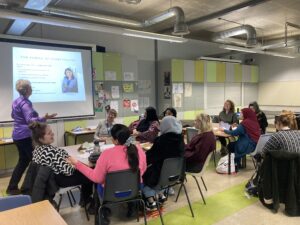
Working Together for Fairer Recruitment
These interactive workshops brought together local employers and members of Roshni, a South Asian Women’s Resource Centre in Sheffield, to...